
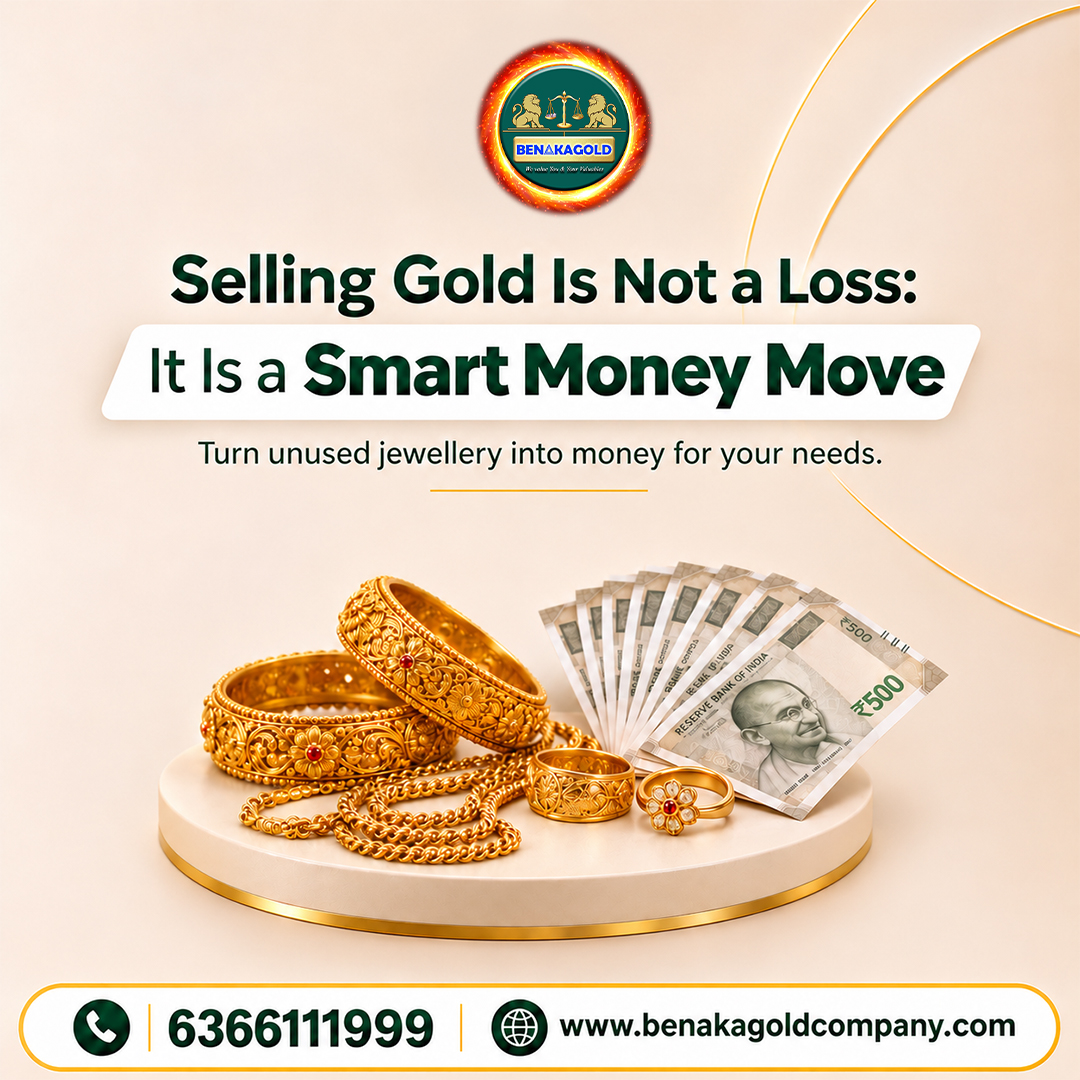
Selling gold is not a loss. It becomes a loss only when you sell at a poor rate, to the wrong gold buyers, or in a panic. Pick honest gold buyers and sell for a real reason, and a locker full of idle jewellery turns into cash for a debt, a wedding, a home or a better investment.
Most families feel the opposite. Gold feels like family, not an asset, so selling feels like giving something up. That feeling is natural. But a smart seller treats gold as both sentiment and savings. This guide shows when selling makes sense, when to wait, and how to deal with gold buyers so you get a fair price.
Quick answers
- The “loss” usually happened when you bought the jewellery (making charges), not when you sell it.
- Sell when you have a real need or idle gold. Wait if you have neither and a headline is scaring you.
- Check the live rate, test purity in front of you, compare gold buyers, and keep your bill.
- Tax applies to your profit, not to the full sale amount.
Why Selling Gold Feels Like a Loss (and Usually Isn’t)
The “loss” most sellers feel rarely happens on the day they sell. It happens on the day they buy.
When you buy jewellery, you pay for the gold and for making charges. When you sell, gold buyers pay for the weight and purity of the gold, not for the design you paid for years ago. That gap is the cost of owning a design. It is not a penalty for selling.
Price swings add to the feeling. As of 6 November 2026, spot gold traded near $4,063 an ounce, about 2% below its recent high and well under January’s record of $5,595. That puts it roughly 27% below the peak. If you bought near that peak, selling now will sting. In that case, you don’t have to sell. Selling is a choice, not a deadline.
When Selling Gold Is a Smart Money Move
Selling makes sense in these situations:
- You carry expensive debt. Credit card and personal loan interest often costs more than idle gold gains, because gold in a locker earns no interest.
- You own gold you never wear. Pieces that sit untouched for years do nothing for you.
- You need cash for a real goal. Education, medical bills, a business or a home deserve a plan, and your own gold can fund part of it.
- Gold makes up too much of your savings. A balanced plan is safer than one asset.
- You want to upgrade. Jewellers expect lightweight jewellery to do well, and some wedding buyers are moving to 18-karat gold. Old heavy pieces can help pay for the switch.
- A piece is broken or out of fashion. Damaged jewellery still has value as gold.
When You Should Wait Before Meeting Gold Buyers
Sometimes the smartest move is to do nothing.
Wait if you have no need and prices just fell. Selling after a sharp dip, without a reason, can turn a paper dip into a real one.
Wait if a headline scared you. Stories about lab-made gold made many owners nervous. We covered that claim in Scientists Turn Mercury Into Gold! Will Gold Become Cheap?. The short version is that the claim is unproven and far from changing the market.
Wait, or pledge, if you need cash only for a short time. Pledging can suit a temporary gap. Our guide on selling vs pledging gold explains the costs of each.
Wait if you aren’t sure what you own. Check purity and papers first, then decide.
How to Choose Trusted Gold Buyers: 5 Steps
1. Check the live gold rate before you meet gold buyers
Rates differ by source and city because of taxes, duties and local demand. As of 6 November 2026, one source listed Bengaluru’s 22K gold at ₹13,385 per gram. Treat any number as a reference and confirm the live rate on the day you sell. Our gold rate articles track daily movements, so you can tell whether a quote is fair.
2. Know your purity and papers
Hallmarked jewellery carries a BIS mark and a HUID code, which makes valuation easier. No hallmark or bill? You can still sell, and our guide on selling old gold without a hallmark explains how.
3. Test purity in front of you
Never hand over your jewellery and walk away. Watch the weighing and the testing. Modern XRF machines read purity without damaging the piece.
Watch for these red flags in gold buyers:
- They refuse to test in front of you.
- They won’t explain how they calculate the price.
- They pressure you to decide immediately.
- They offer no bill.
4. Compare gold buyers and ask for the formula
Visit at least two or three gold buyers. Ask each one to explain how it reaches the number: weight, tested purity, live rate and any deduction for wastage or melting. Offers that look similar can differ once deductions appear. Our guide on getting the best price for old gold shows what to compare.
5. Take a written bill and a traceable payment
Always get a bill with the weight, purity and rate. Prefer a bank transfer or UPI so you have a payment record. Our guide on how to sell gold for cash covers your options.
Does Selling Gold Mean You Pay Tax?
Often yes, but only on your profit. Many sellers fear a tax on the whole amount, and that isn’t how it works.
- Tax is calculated only on the profit, not on the full selling amount.
- For physical gold, including jewellery, the long-term holding period is 24 months for sales since July 23, 2024.
- If you hold it for more than 24 months, long-term gains are taxed at 12.5% without indexation. If you hold it for 24 months or less, gains are taxed at your slab rate.
- For inherited gold, the cost and holding period count from when the original owner bought it.
- Buying new jewellery with the proceeds doesn’t automatically cancel the tax liability.
Tax rules change, and every case differs, so talk to a chartered accountant before a large sale. Keep your old purchase bills.
A Simple Example: 20 Grams of 22K Jewellery
At the 6 November reference rate of ₹13,385 per gram, 20 grams of 22K gold is worth about ₹2,67,700 before any testing or wastage deductions.
Suppose you bought it five years ago for ₹1,20,000, including making charges. Your profit is ₹1,47,700. At the long-term rate of 12.5%, the tax comes to about ₹18,460 (plus cess), not on the full ₹2.67 lakh.
This is an illustration only. Your purchase cost, the day’s rate and the deductions that gold buyers apply will all be different.
Mistakes Sellers Make With Gold Buyers
- Selling to the first buyer without comparing offers.
- Skipping the test or letting someone test out of sight.
- Selling in panic because of a news headline or a one-day price fall.
- Ignoring tax, then facing a surprise later.
- Confusing pledging with selling, and paying more than necessary.
- Taking no bill, which leaves you without proof of the sale.
Final Word: Pick Gold Buyers Who Show Their Work
Selling gold is not a loss. A loss comes from a rushed decision, a weak offer or missing paperwork. If you have idle jewellery, a real need or a plan, selling can be one of the smartest money moves you make. If you have none of those, hold on without guilt. Our guide on gold as an investment in Bangalore can help you think about the long term.
If you decide to sell, choose gold buyers who test openly, quote clearly and pay quickly. Benaka Gold Company says it has served more than 1,50,000 customers over six years. According to its website, it tests purity with German XRF technology in front of you, prices gold on the live market rate and pays instantly. Visit its page to sell gold in Bangalore and get a clear quote before you decide.
This article is for general information and is not financial or tax advice. Rates and tax rules can change, so check current figures and speak to a qualified professional before you act.
Leave a Reply